You might have heard the term ‘suction’ used loosely in conversations about a finishing project before; but what does it really mean?

There are five different suctions in this room alone. Not even paint will cover this without showing shine-through..
In general, suction describes a structure’s ability to absorb moisture. This means, the rate at which the surface will take moisture out of your wet finish, and with it, take some of the product’s adhesive components. Making it stick.
Suction is therefore essential for creating a proper bond between the finish and the structure, but suction can also be the finish’s worst enemy. As a result, there is a fine line that needs to be drawn between too much suction and too little suction.
As an added problematic bonus to the variable of too much or too little suction; you get suction variations over the surface of the same structure as well as suction caused through settlement or shrinkage cracks.
This is essential reading if you are building or renovating a house. You are spending a lot of money, and you want something that will look good; spend the time to read these couple of pages.
This paper will describe the following:
- Too much and too little suction
- Suction differences over the same surface
- Cement crystallisation and suction (for cementitious adhesives, cementitious waterproofing products, and decorative cement finishes)
- Shrinkage cracks, dehydration and capillary action.
- A word of warning.
Too much or too little suction

Reducing the amount of suction in this weak plaster before applying further preparation materials with CemBond
As a rule of thumb, suction on an unfinished surface, for instance a newly plastered wall or a bare concrete floor, will usually be too much. This can be attributed to the quality of cement used in the structure, the type of aggregate (sand or stone mixed with the cement), the amount of curing done on the structure, temperature fluctuations during the drying and curing time of the cement, how it was applied, whether the applicator followed the rules of cement application; and a lot of other variables.
In essence, there are not a lot of people who know what cement really is and how it works, and as a result, not a lot of people who does it right.

Suction equalised over wall with different textures. You can see how the textures are still shining through. The suction is however now right, and if you work over this, nothing should shine through in your finish.
Too much suction has the effect that it draws the moisture out of your finish too quickly, and as a result, hinders the product from properly curing. This means that the product can crack, set much softer than what it’s supposed to, become dusty, and even delaminate from the surface.
Too little suction will cause the product not to adhere to the surface that it is applied to, meaning that it might crack or delaminate.
Suction also influences the colour of the finish in that the pigmentation process reacts differently when it dries out quickly, as opposed to when it stays wet longer.
We need to therefore be aware of the requirements of a surface and do the right preparation, before starting to do any application of our finish.
Suction differences over the same surface

A newly chased plug point. Suction variances are inevitable!
Picture for a moment one of the most common occurrences on a building site: The wall is perfectly plastered, everything seems fine, the plaster looks good, and then you realise that it would be nice to have an extra plug point in that wall. The wall does not have its finish on yet, so no costs have gone into that. So you ask the builder or electrician to quickly chase a new cable into the wall and install the plug, and then to quickly cover it up with some new plaster; with the specific request that the new patch must be smooth with the old wall. Once this is all done, everything seems to be fine.

A good example of a wall finished with SatinCrete without any preparation done to equalise the suction problems.
The only problem is that you now have an area where the new plaster is different from the old one, and that difference is a variation in suction. What then happens is that the finish being applied over it will dry differently over the two surfaces, and that chase-line will shine through in the finish.
The only way around this is to equalise the suction differences by utilising a couple of products that can ‘seal-off’ the old surface and still create enough suction for the finishing product to adhere to properly and dry adequately.
Luckily these products do exist, but they are quite technical and should be done by professionals. Hint: we are professionals!
Cement crystallisation and suction (for cementitious adhesives, cementitious waterproofing products, and decorative cement finishes)
Have you ever wondered how cement actually works? You mix it with some sand, and some water, and then it goes hard. But how does it do that? You might even feel good about the fact that you know that cement needs to cure, and that it needs to be watered over a period of time so that it can get harder. But why?
Cement seems to be such a general thing. Everyone uses it. Houses get built with it. Concrete gets made from it. It is hard, strong, and nothing to worry about. But what makes it work?
The fact is, the science of cement is more intricate than most people realise, and the variables influencing it even more so.

Microscopic view of cement crystals after 28 days
In laymen’s terms, cement becomes hard through a crystallisation process which is put into action through a chemical reaction with water. This goes for anything that has cement in it. Tile adhesives, cementitious sealers, decorative and coloured cement products, screeds, plasters, etc.
The crystallisation process can be compared to hair growing, interweaving between and through each other, growing around anything that might be in contact with it, and therefore obtaining its strength from this knotted mass of hair/crystals. It can only grow while in contact with moisture – curing – and will stop growing until moisture is introduced again, but at a much reduced rate than if it were continually kept moist. This process goes on for 28 days.
Because of this crystallisation process, cement has an added benefit: it can adhere to a surface by crystallising into it; and that is where suction becomes such an interesting phenomena: If the surface is porus enough to allow for the penetration of the cement crystals, moist enough, and strong enough not to get broken off by the tension created from the hardening cement, you get a situation where the cement can form an extremely strong bond between itself and the structure. If, however, there is nothing for the cement to crystallise into, other methods of ‘sticking’ it onto the surface need to be used. These methods do exist; and works, but again it needs a specialist who understands these methods of preparation. Hint again: We are such specialists!
Shrinkage cracks, dehydration and capillary action
It is important to note that cement in and off itself is not extremely strong. It needs aggregates like sand or stone or silica or crusher to grow its crystals around and effectively ‘knotting’ the aggregate into the mesh of ‘hair’ to really come to its full potential strength.
A rule of thumb here would be that the thickness of the application must be about five to eight times the thickness of the average biggest piece of aggregate in the mixture. As such, concrete with a maximum aggregate size of 19mm should be used for a slab of between 100mm to 150mm. An aggregate of 13mm can be used for a concrete slab of between 75mm and 100mm, and an aggregate of 4mm can be used for a screed of about 25mm to 40mm.

This is a good example of shrinkage cracks that will cause capillary action to take place
This is where the problem comes in: the normal aggregate size of plaster sand is about 0.2mm to 0.5mm, and as such your plaster should actually be quite thin (it would not really be possible to plaster and nicely float a wall with an aggregate of 1mm to 1.6mm) but generally, plasterers needs to cover imperfections in the walls, and therefore plaster will commonly be done at about 16mm to 20mm, and even thicker.
This is where the shrinkage/settlement cracks greatly comes into play: the plaster is thicker than what the aggregate actually allows for, and as such, things like weight, surface tension, and the rapid escape of moisture (dehydration), causes the plaster to break up and leave cracks because it did not have time to properly crystallise.
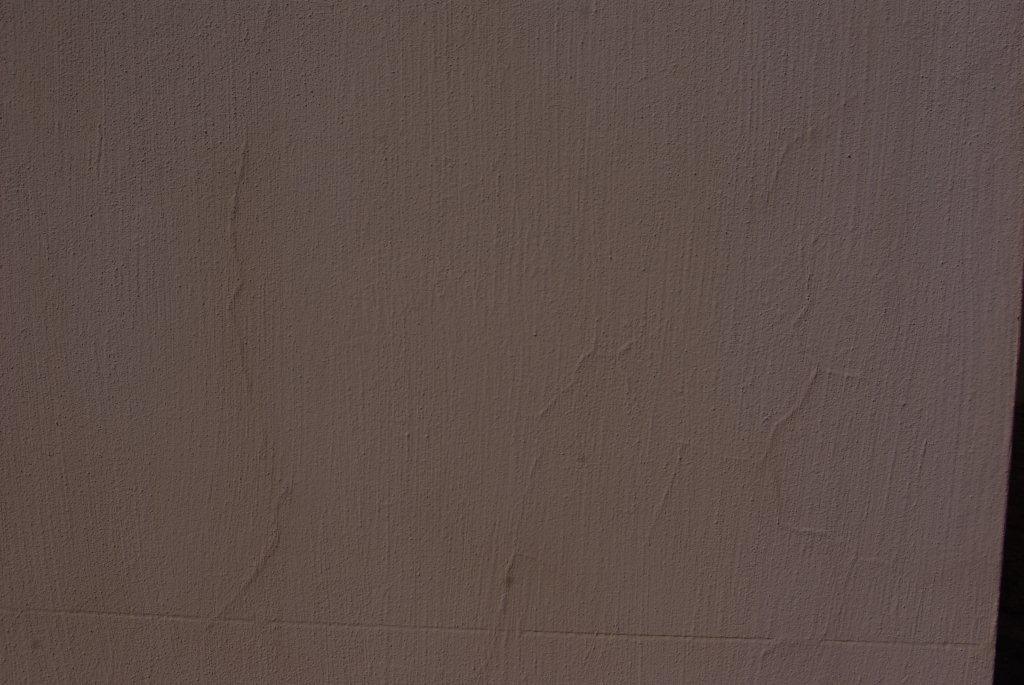
A good example of the causes of capillary action
There is not much that can be done about this, because it would be extremely difficult to plaster a wall with a big aggregate in the plaster.
In addition to this, movement in the structure itself also causes the plaster to crack.
So, initially, you will always get cracks in the plaster. This cracking process should settle after a month or so, but what are the implications of these cracks?
A crack creates a phenomenon called capillary action. This is where the crack ‘sucks’ moisture into it much more rapidly than the suction rate of the surface in general.
This has two effects: firstly, it – almost immediately – dries the product being applied over it out; and secondly, now this moisture slowly starts coming out again, rewetting the product, and keeping it wet for longer than the product applied to the general surface.
In the first action, where the moisture gets sucked out of the product – if it is a cementitious paint – that paint will tend to be thicker over the crack than the rest of the paint. When the applicator goes over that part again – which generally gets done about two or three times per coat – more product tend to stick to the dried out parts, and it creates a lump over the crack. If the product being applied were a usual paint, the paint itself would get sucked into the crack, and the crack would remain visible. If it is a thin plaster skim, this capillary action could cause that skim to form its own shrinkage cracks.
In the second action, where the moisture is now slowly releasing again, it keeps the product around the crack wet for longer than the rest of the product. This alters the pigmentation process of the finish, and as such, the areas around the cracks will be darker than the general wall.
Luckily again, there are ways to guard against these problems through certain methods of preparation, but you need an expert to apply this. Last hint for the day: we are those experts, and we know the products.
A Word of warning
Now that you have a general idea about how cement works, and why you get certain problems with cracks, I can explain to you a couple of things that you need to look out for on your site. These are some of the biggest reasons why people experience so many failures in the building industry.
- Plaster and screed should be used quickly and not be allowed to dry out before it gets applied.Usually you will see your plasterers mixing a huge heap of plaster sand and cement. They then start plastering, and at some point take lunch. When they get back, they wet the hardened plaster-mix-heap, mix it around with their shovels until it looks like a nice sloppy plaster-mix again, and then continue plastering. Even worse, they leave it overnight, and mixes it again the next morning.From what I have explained above, it should be quite obvious that in this way they break the crystals/hairs up, and therefore greatly weaken the structure of the cement.Remember, cement obtains an overwhelming amount of its strength during the first couple of hours of being mixed with water – depending on temperature, sun and wind. You therefore already lose a lot of your

The plaster on this wall was never cured. The builder also used the wrong mixing ratio. Too little cement, in direct sunlight, with no curing. This was the case on the entire house. The only way to fix this was to remove all the plaster and redo the entire house. PREVENTION IS BETTER THAN CURE!
maximum strength in this way. So, rather mix smaller quantities, and use it quicker, than mixing huge quantities at once and applying it over a longer period. That will give you long term problems.
Cement rarely reaches its maximum possible strength in any case because it does not get cured properly, the aggregate is not of good quality, etc.

- Where possible, do not apply in the sun or use shade netting to block the sun out. For instance, if you start plastering in the morning, choose the walls that are currently in the shade, and move to the walls that will be in the shade in the afternoon. Make sure that, during the afternoon, you wet the walls that were applied in the morning, and vice versa, with a fine water mist spray, and continue this for at least six days after application.
-

Weak Plaster allowing moisture in. Usually people think that they can put a finish over this… Don’t!
The mixing ratio for cement is usually four aggregate to one cement. A cubic meter of aggregate (about 16 wheelbarrows) will therefore use about 8 bags of cement. One wheelbarrow = two bags of cement – not one! – so for every four wheelbarrows of aggregate, you must use two bags of cement. Check your mixers; they usually think four wheelbarrows to one bag of cement. Your ratio is then one to eight, and you will have a weak structure! Do not let this one slip. It will cost you dearly. We see it all the time.

- Tile adhesives and other rapid hardening cement products have chemicals in that assist the initial growth of crystals. The product should therefore be used within the specified time and never be mixed with a little more water to obtain the desired consistency again. It just breaks down the structure of the cement and you are left with a very weak product.Also, be careful of having the mixed product standing in the sun, and make sure that you cure the product with a fine mist spray as soon as possible. Especially if it has to be applied in the sun.
- Do not apply during cold temperatures. The cement crystallisation process effectively stops in temperatures below 8°C, and if the product freezes, it will simply break up.
- Make sure that you let all the warm water run out of the hosepipe before adding water to your cement. The water inside a hosepipe that has been standing in the sun can reach temperatures of 70°C. Adding this water to your cement would majorly accelerate the crystallisation process, leaving you with cement that has already cured before you could use it.
- The quality of your aggregate is extremely important. Plaster sand and river sand – when it is mined – usually has a high clay content. A clay particle can expand to about nine times its own size when wet, and shrink back to its original size when it dries out again. If your aggregate has a high clay content, you will get crags in your finish.
At Creative Touches we have invested a lot in mistakes and school fees. We have seen what the implications of mistakes and shortcuts can be. As such, we don’t entertain them. We believe that an investment in us is an investment in success, and we give it our best.
Your journey starts here.

Rhinolite splatters on plaster should be removed and suction should be equalised

Equalise suction with CemWash Primer for CemWash application

Creating a mechanical key in the wet BaseCoat for receiving SatinCrete
About the author: Michael Pretorius is an experienced interior designer and owner of Creative Touches interiors. For more information you can visit www.creativetouches.co.za or call him directly on 082-392-3336


Fantastic article! I never knew how intricate cement is.
Now I see why all the brand new houses in my complex are cracking after only a few months.
Thanks for writing this.
Thanks.
And the worst is, people let their builders get away with murder. If they just knew a few simple principles, it would make such a big difference.
Good article, exelent information,
Thanks
awesome blog, do you have twitter or facebook? i will bookmark this page thanks.
My blog:
rachat de credits rachatdecredit.net
Thanks for this.
Our facebook page is http://www.facebook.com/CreativeTouches and you can follow me on http://twitter.com/creativetouches
The article you wrote is very interesting.
This article was really good. I look forward to reading another one.
I could read a book about this without fidinng such real-world approaches!
Essays like this are so important to broadening people’s hrozoins.